



At the end of each year, we recognize the best games we played in their entirety, but we also like to zoom in and celebrate the individual moments we loved most; the mechanics, scenes, and other details that made this year’s best games so unforgettable. That’s what we do with our “Best Moments” lists. These can be big story reveals, or they can be small moments that stuck out in otherwise massive games. If you’re worried about spoilers, we’ve got you. Here are the games we’ll be talking about and in what order, so if you see something on this list you want to avoid, you can scroll past it real quick:
- Death Stranding 2: On the Beach
- Hollow Knight: Silksong
- Clair Obscur: Expedition 33
- The Hundred Line: Last Defense Academy
Defeating Everdark Gaping Jaw in Nightreign
Elden Ring Nightreign is excellent at making you think you’re finally getting the hang of things before sucker-punching the wind back out of you. Everdark Sovereign Gaping Jaw, the first bonus boss fight added to the game after launch, showed how an encounter can stomp all over everyone while also slowly training them to get better at it until an obstacle that previously felt insurmountable becomes trivially easy to overcome.
There aren’t any tricks or puzzles to solve here, either. You just lock in, learn the sound cues by heart, and get killed over and over again until it all clicks in your head. FromSoftware has created many such moments over the years, but Nightreign took them to another level by letting you suffer and triumph together with other people at your side. It was year-one Destiny raid level stuff, but without having to waste any time sitting in front of a loot cave waiting for a lottery. – Ethan Gach
Realizing you can smash anything in Donkey Kong Bananza
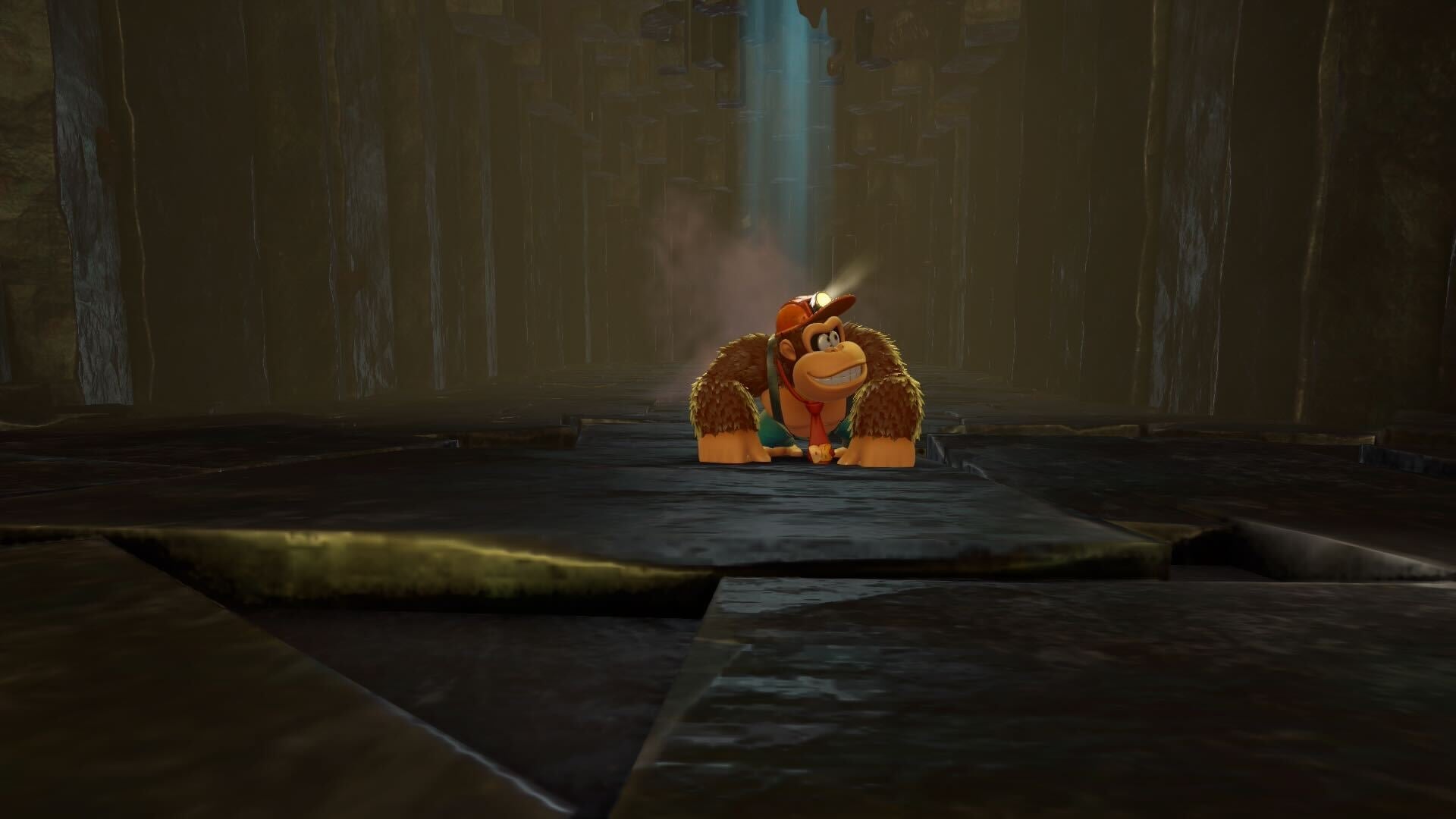
Donkey Kong Bananza’s destructible environments can be incredibly distracting, but they sure are a fascinating technical feat. Before I even left the first room, I realized that I could punch through just about all the walls, floor, and ceiling, and a bunch of little golden bits would fall out. Then I could smash those up, too. Donkey Kong Bananza‘s destructible environments are the most expensive fidget toy you’ve ever held in your hands, and there really is nothing quite like the moment it clicks that you can go pretty much anywhere you want if you’ve got the determination to punch through the wall between you and your destination. — Kenneth Shepard
The big reveal at the end of Death Stranding 2
Throughout Death Stranding 2, you once again take control of Sam Porter Bridges, this time traveling around Australia on a ship called the D.H.V. Magellan, bringing people at remote outposts onto the chiral network. Throughout all of this, Die Hardman, one of your most prominent team members in the first game, is entirely absent, and your operation is instead being run by a mysterious benefactor known as Charlie, who takes the form of a mostly featureless humanoid robot. But just when the villainous President reveals the true scope of his nefarious plan to our hero, Charlie emerges from the tar and declares, “I’m not about to let that happen.” What transpires next isn’t memorable so much for the information it reveals, but for how that information is revealed. Death Stranding 2 received some criticism—justifiably, in my opinion—for being a safer game than its predecessor, but in this big narrative moment, Kojima gives us some of his signature storytelling audacity.
Does Charlie merely emerge and reveal himself as Die Hardman? No, of course not. He sings a lullaby that evolves into a poppy dance number, performed with gusto by the wonderful Tommie Earl Jenkins. Back on the D.H. V. Magellan, he then proceeds to deliver a lengthy explanation for many of the story’s mysteries, but this, too, is pure Kojima. Maybe my favorite bit in the entire game occurs when Die Hardman stops talking to Sam and starts talking to us, the players. He looks right at the camera and says of the ship, “Now, I daresay there are some among you who already deduced the name’s double meaning,” before explaining that D.H.V. doesn’t just stand for Deep-tar Hunting Vessel; it also stands for Die Hardman’s Vessel. Sorry dude, that’s too galaxy-brain for me, but I’m happy for any of my fellow players who may have somehow put that together!
Look, I played through this entire game and couldn’t explain the plot of it to save my life. But for me and for, I suspect, Kojima himself, the specific details of what happens aren’t as important as how it all happens. Die Hardman does a big dance number to demonstrate that humanity, in all of its flawed messiness, is something worth saving, and I think that’s as beautiful as it is true. — Carolyn Petit
Metroid Prime 4‘s Volt Forge
Metroid Prime 4: Beyond isn’t the masterpiece sequel that so many fans have been clamoring for since it was first teased back in 2017. In fact, a lot of the game is mostly…fine. However, the first big area you visit, Volt Forge, is a memorable exception, featuring a creepy atmosphere, haunting music, impressive architecture, and the reveal of a badass motorcycle. Sadly, this motorcycle ends up being a key piece of Prime 4‘s worst idea, the game’s open-world desert hub, but that doesn’t change that Volt Forge is a fantastic way to kick off Prime 4.
Reaching this area during my playthrough changed my feelings on the game. Prime 4’s intro and opening level felt generic and uninspired. Reaching Volt Forge, I suddenly felt like I was in a truly alien and dangerous world, fighting for survival and trying to figure out a way to save the day. It’s just a shame the rest of Metroid Prime 4: Beyond is all downhill from there, and by the end, Volt Forge felt so, so far away. -Zack Zwiezen
Ecuador qualifies for the World Cup in Despelote
Despelote is an autobiographical game about a young Ecuadorian boy’s experiences during the nation’s qualifying run for the 2002 World Cup. Over the course of the game, we’re immersed in the specificity of Julian’s experiences, understanding how soccer, and the excitement around his country’s chances to qualify for competition on the global stage, electrified him as an individual and made him feel more deeply connected to his fellow Ecuadorians. Finally, the country’s qualifying efforts all come down to a match against Uruguay on November 7, 2001. Narrating as we play, the real-life Julian says, “We tried every single way to depict this moment, but nothing felt like it did it justice. So just watch it for yourself.”
Suddenly the screen goes black and for a moment and we’re in total silence, a far cry from the sights and sounds of the Ecuadorian park we were in just a moment before. Then it begins, a grainy TV broadcast in which ads for Alka-Seltzer and Chevrolet play in the lower right, drowning out any play-by-play commentary. We watch the Ecuadorian players pass to each other and get into scoring position. And as an ad for an LG microwave plays, a shot is taken, a point is earned, and history is made. The ad is silenced and we hear the roar of the stadium while the commentators shout, “GOOOOAAAAAAAAALLLL!!!”
Now, dear reader, believe me when I say I basically know nothing about soccer and have certainly never followed the sport. And yet, when that goal went in, tears streamed down my face and I pumped my fist in the air. I felt the jubilation of an entire nation. — Carolyn Petit
The bar fight in Dispatch
Last week, I was gathered with friends at a local karaoke spot and somebody queued up Meredith Brooks’ “Bitch” and asked if the room had played Dispatch, AdHoc’s superhero workplace comedy. I immediately knew what was about to go down and also plugged my interview with the team on the scene my friend was about to reference to a room of drunk singers. The pair on stage started singing the Dispatch karaoke rewrite of the classic ‘90s rock song as everyone who had never played the game looked around confused. Sadly “Hoes Depressed,” the banging cheerleader-esque rap song that backs the subsequent bar fight, wasn’t on the list for me to sing as well, but it was nice to see that this segment of the episodic game had broken out of the confines of video game culture
The bar fight in Dispatch is a rollicking, hootin’ and hollerin’ blast of over-the-top violence and perfectly timed comedy, all punctuated by the heartfelt camaraderie of a team finally viewing each other as equal members of a cohesive unit. It’s the best of Dispatch rolled into five minutes. — Kenneth Shepard
The fake bench in Hollow Knight: Silksong
With all its difficult bosses and frantic platforming segments, Hollow Knight: Silksong is a game of constant danger. Any time you get a moment to stop and catch your breath must be savored. Team Cherry knew that, and created one of the most diabolical fakeouts a game put us through in 2025. Hunter’s March is one of the most difficult sections of the game, so if you can find a bench that lets you save and rest, you’d better sit your ass down. But Team Cherry sets up a trap on one of these seats, and if you sit down without disarming it, you’ll get whacked by a bunch of spikes. If you were already barely hanging on, it might send you back to your last checkpoint without a chance to save. I only saw this happen secondhand, which means I was spared such torment. But I did love watching other players suffer. — Kenneth Shepard
Finding Room 46 (the first time) in Blue Prince
Throughout the entirety of Dogubomb’s puzzle game Blue Prince, you’re looking for a mysterious 46th room in a mansion that supposedly only has 45. Making matters more challenging, the layout of the house is randomized, so when your skill and persistence finally pay off and you do eventually find it, there’s a sense of accomplishment. However, the first time you play through Blue Prince, you’ll only be able to look inside, not enter it yourself. Fans have jokingly said that reaching this elusive room is merely the end of the game’s tutorial, as it unlocks new challenges and wraps up lingering threads if you manage to track it down once more. That delayed gratification, after everything you’ve done, is the kind of contemplative conclusion I love most. Though the most tenacious players will eventually set foot in Room 46, that first run, in which you can only imagine what you might find in its walls, hits. — Kenneth Shepard
The true ending fight of Octopath Traveler 0
Octopath Traveler 0 is a repurposed gacha game that, at one point, let you unlock dozens of party members through gambling. Now that it’s structured like a more typical RPG, all those characters can feel a bit superfluous. How could you possibly use them all in a single playthrough, even given Octopath Traveler 0’s lengthy runtime? Well, you do it by making the game’s final battle one that requires you to use all of them at once. Some of these characters you may have never used or given much thought to, but you’d better learn how to use them quick, because Everyone Is Here. It’s an audacious swing at the eleventh hour, and it’s one only a game with this many characters can pull off. — Kenneth Shepard
The choice in Clair Obscur: Expedition 33
There was probably no version of Clair Obscur: Expedition 33 that had a happy ending, but I don’t think anyone anticipated being able to choose its finale. When you’ve reached the end of Sandfall Interactive’s RPG, you’ve learned a series of truths: the world you have been fighting to save isn’t real, and is instead the creation of Maelle’s long-lost brother, Verso. The Verso you’ve been fighting alongside for most of the game is a fictional recreation of him, and he wants to tear the whole thing down. Maelle, unwilling to destroy her late brother’s creation and longing to stay here forever, nearly strikes Verso down as he attempts to destroy this painted world. Then, the player is asked to choose who to fight as during this final confrontation.
From a mechanical standpoint, at least, the fight itself is easy, but even as the two argue back and forth about their respective goals, it’s clear that this fight has gone beyond words. Only swords and spells will settle things. Both decisions end in tragedy, and no matter which you pick, you’re left sitting with a feeling that you might’ve made the wrong choice. Just as all good video game decisions should. — Kenneth Shepard
The final level of Split Fiction
Split Fiction spends all of its time equally dividing its levels between Mio’s science fiction stories and Zoe’s fantasy worlds, so I figured its final level would probably take place primarily in some kind of neutral space. The whole thing’s a simulation, after all. It would make sense if the ending, in which both girls escape back into the real world, would take place in a stark, mechanical level that didn’t prioritize one writer’s sensibilities over the other’s. Instead, Hazelight did something I wouldn’t have thought possible, combining both worlds simultaneously to illustrate the simulation breaking down in an entirely different way.
The final stage is one space shared by the game’s two protagonists, but it shows up differently on both sides of its split screen. Whoever is playing as Mio will see city skyscrapers and giant mechs, while the other will face dragons in magical forests. As players and foes move back and forth between both sides of the screen, obstacles and other threats will change to match the genre, with the actual divide between both screens also spinning and shifting in real-time. It is such a mechanical flex that I feel like words fail when I try to describe it. Just watch it and see for yourself. It’s incredible. — Kenneth Shepard
Seeing your favorite Pokémon mega evolve in Legends: Z-A for the first time
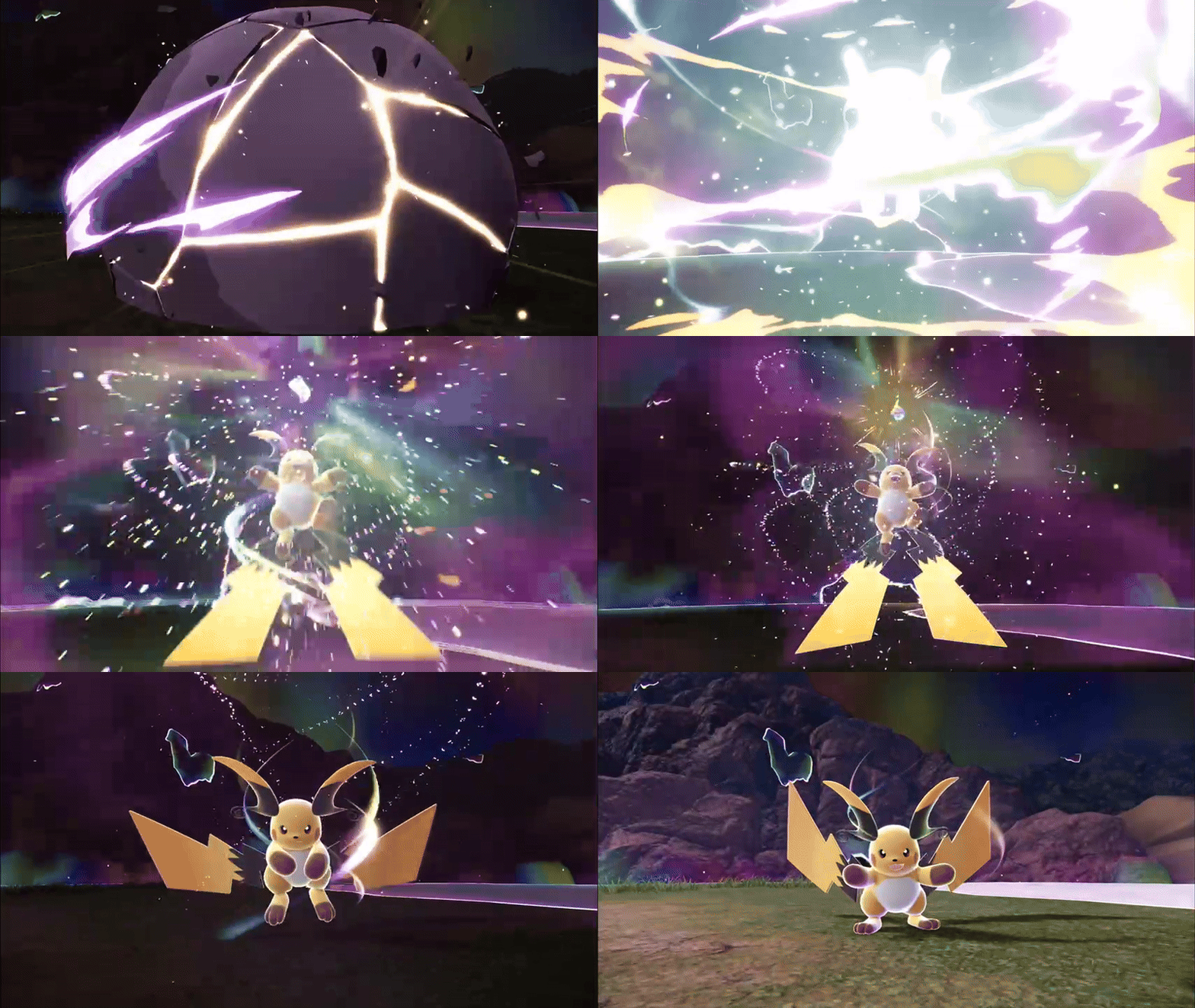
Whether your favorite Pokémon has always had a Mega Evolution or they got a new one in Legends: Z-A, it’s pretty fucking hype when you see them undergo one of these superpowered transformations for the first time.
The Mega Evolution phenomenon is only (supposed to be) possible through the connection between Pokémon and trainer, so when your fave that you’ve been battling alongside the whole game finally has a Mega Stone of their own and can face Legends: Z-A’s greatest challenges, it rules. For me, it was even more special because Raichu, my favorite Pokémon, has been denied a Mega for over a decade. Now he’s got two. I used to pray for times like this. — Kenneth Shepard
The first ending in The Hundred Line: Last Defense Academy
You know that feeling you get when you think you’re about to overcome an incredibly difficult boss fight, only for it to enter a second phase? That’s basically what The Hundred Line: Last Defense Academy’s first ending is, but instead of facing a boss, you’re living out 100 days in a visual novel/strategy RPG.
When I played through the first 100 days in Too Kyo Games’ high school defense simulator, I didn’t understand how its 100 endings, which had been a major part of The Hundred Line’s marketing, could manifest. I hadn’t been making any narrative choices, and as far as I could tell my strategic ones hadn’t nudged the story in any meaningful way. Where were these dozens of other conclusions hiding? On day 100, I found out.
After defending the Last Defense Academy for three months and change, everything had gone completely wrong, and all that seemed left to do was to hop in an escape pod and leave our lost home behind. But there was one other option: using protagonist Takumi’s newly unlocked rewind ability to start back at the beginning of those 100 days. It was here I’d find a malleable timeline of 99 other possibilities. If I wasn’t already overwhelmed enough by the thought of replaying those 100 days, The Hundred Line lays it on real thick by slapping a “2” on the title screen. The real game has only just begun. — Kenneth Shepard