


Introduction to Doom: The Dark Ages
Doom: The Dark Ages is not just another addition to the legendary Doom franchise—it’s a thunderous prequel that dares to go medieval on us, both literally and thematically. Developed by id Software and published by Bethesda, this latest installment transports the iconic Doom Slayer to a brutal, blood-soaked era filled with swords, shields, dragons, and of course, hordes of demonic enemies. If Doom Eternal was an action-packed heavy metal concert, The Dark Ages is a bone-crunching Viking war chant echoing through gothic cathedrals.
Set centuries before the events of the 2016 reboot, this prequel tells the origin story of the Doom Slayer in a world where magic and machinery coexist, and violence is the primary language spoken. Gone are the high-tech labs and interplanetary corridors—instead, you’ll battle evil in medieval castles, cursed fields, and towering infernos. What sets this game apart isn’t just its setting, but how that setting transforms every aspect of gameplay—from weapons and combat to exploration and atmosphere.
For fans of the series, there’s plenty of familiar carnage and chaos, but it’s delivered in fresh, visceral ways. For newcomers, Doom: The Dark Ages offers an accessible entry point with modern controls, customizable difficulty settings, and tight, satisfying combat mechanics. It’s Doom reimagined—not re-skinned.
In this in-depth review on Play Games X, we’re diving deep into what makes Doom: The Dark Ages a standout title in 2025. Whether you’re curious about the new gameplay mechanics, wondering how the story connects to past games, or simply want to know if it lives up to the hype, you’ll get all the answers right here.
Gameplay Mechanics
Combat in Doom: The Dark Ages is a raw, tactile, and deliberate experience that redefines how Doom should feel. Unlike the turbo-speed chaos of Doom Eternal, which had you dashing and double-jumping like a hyperactive ninja, The Dark Ages grounds you in heavy armor and asks you to fight like a knight in a war-torn realm. And it’s absolutely glorious.
First off, movement feels slower, more weighted—but intentionally so. You’re not zipping around at breakneck speed. Instead, each step feels like a stomp. You charge into the fray, plant your feet, and make every swing count. This is Doom’s answer to tactical brawlers like Dark Souls and God of War, and it works.
The game’s melee system is front and center. The Shield Saw—an incredible fusion of buzz-saw and shield—is your new best friend. You can use it to block incoming attacks, perform devastating shield bashes, or throw it like Captain America on steroids. Combine that with the ability to parry enemy strikes, and you have a deeply strategic layer baked into every fight.
Don’t think ranged combat has been ignored, though. You still get a delicious arsenal of medieval-inspired firearms: bolt throwers, demonic blasters, and bone-crunching maces that act as heavy launchers. What’s unique is how these weapons work in tandem with melee. Ammo is limited. Health doesn’t regenerate. So to survive, you need to get up close and personal—kill enemies to gain resources and keep the carnage going.
The new combat loop revolves around managing health, armor, and ammo through aggressive actions. Melee kills drop health, shield parries grant armor, and strategic combos keep you alive. The game pushes you to stay offensive. The more brutal you are, the more rewards you get.
Simply put, Doom: The Dark Ages makes you feel like a medieval god of war—and that’s exactly what Doom should be.
The Shield Saw: A Game-Changer Weapon
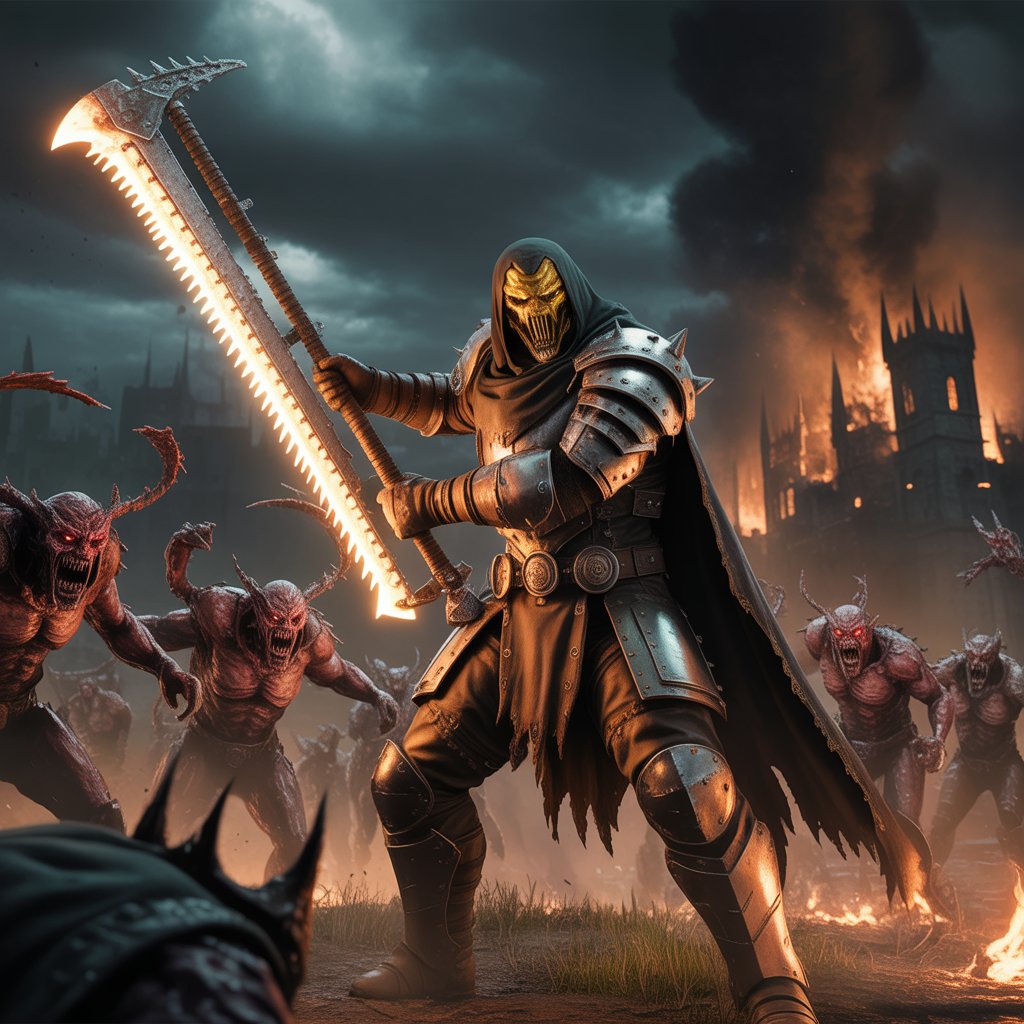
If there’s one weapon that defines the gameplay of Doom: The Dark Ages, it’s the Shield Saw. This isn’t just a gimmick or a cool-looking toy—it’s the core of how you’ll survive and dominate in this savage world. It changes how you think, how you fight, and how you move through every level.
The Shield Saw serves three critical purposes. First, it’s your primary melee weapon. With it, you can slice through smaller demons like they’re made of paper, and it’s especially useful when ammo runs dry (which it often does). The slashing animations are brutal, satisfying, and utterly Doom-esque.
Second, the shield functionality brings in a new layer of defensive strategy. You can raise the shield to block incoming melee and projectile attacks, and if your timing is just right, a well-executed parry will stagger enemies and open them up for a finishing move. This parry mechanic is a first for the series and adds a beautifully timed rhythm to the mayhem. Unlike games that spam you with dodge mechanics, this one encourages you to stand your ground and deflect like a true warrior.
Third—and perhaps the most fun—it can be thrown. That’s right, you can toss the Shield Saw like a spinning blade of death, bouncing it off multiple enemies like some twisted blend of a boomerang and a buzz saw. It’s visually stunning and deadly effective.
The best part? You’re not punished for using it. The game encourages experimentation with Shield Saw combos. Knock back a demon, throw the shield, follow up with a shotgun blast, then finish with a brutal stomp—it’s all one seamless, savage ballet.
For longtime fans of Doom, the Shield Saw represents innovation without compromise. It respects the series’ core identity—fast, violent, over-the-top combat—but reshapes it through clever design and thrilling utility.
Storyline & Lore
One of the most surprising elements in Doom: The Dark Ages is how much lore and narrative depth it brings to the table. Let’s be honest—Doom has never been about story first. It’s always been about killing demons in the most violent way possible. But with this prequel, id Software leans hard into building a mythos around the Slayer’s origins—and it actually works.
Set long before the events of Doom (2016) and Doom Eternal, the game introduces us to the early days of the Sentinel Order, a powerful faction sworn to combat Hell’s invasion of ancient realms. You are not yet the Slayer, but rather a warrior chosen by fate—the one who will eventually become the legend we know today.
The medieval world is steeped in doom-lore. You’ll explore cursed monasteries, crumbling strongholds, and demonic breeding pits, each filled with codex entries, ancient tomes, and ghostly echoes of fallen warriors. These story elements are optional but add tremendous atmosphere and richness if you choose to dive in.
What makes the lore compelling is its presentation. The game avoids lengthy cutscenes. Instead, it uses voice-over flashbacks, ambient storytelling, and scripted in-game events. You’ll hear whispers in crypts, see murals etched with prophecy, and watch as characters refer to you with a mixture of reverence and fear.
The villains are also a step up. Instead of generic demons, you face named warlords and corrupted kings, each with a backstory and unique combat behavior. You’re not just mowing down waves of faceless enemies—you’re challenging a cursed empire led by twisted monarchs.
Is the story Shakespeare? No. But in the context of a Doom game, it’s ambitious, immersive, and surprisingly coherent. It gives purpose to your violence, context to your chaos, and a mythic identity to the Doom Slayer that fans can rally behind.

Level Design & Environment
If combat is the heart of Doom: The Dark Ages, then level design is its spine. Every mission in the game feels like a hand-crafted war zone filled with opportunities to explore, experiment, and exterminate. Gone are the tight corridors of UAC labs—this time, you’re fighting across sprawling battlefields, ruined cathedrals, lava rivers, and cursed forests.
What makes the levels shine is their verticality and openness. There are multiple paths to reach your objectives, many of which are guarded by mini-bosses, hidden traps, or environmental puzzles. This means you’re not just moving from point A to point B—you’re constantly exploring, looking for secrets, testing your platforming skills, and unlocking hidden rooms filled with rewards.
Each level is divided into arena zones, where combat intensifies, and traversal zones, where you’ll solve puzzles, collect resources, and find lore entries. Arena design deserves special mention—each fight feels like a gladiatorial match, with environmental hazards, elevation points, and demon spawn waves designed to push your skills to the limit.
The game also introduces massive set-piece events—riding a dragon into battle, piloting a giant mech, or destroying an entire enemy fortress with a magical siege weapon. These cinematic moments don’t feel forced—they’re seamlessly integrated into gameplay and keep things exciting.
And let’s not forget the art direction. The environments are dripping with gothic, medieval horror. Giant demonic skulls adorn castle gates. Rivers of blood flow beneath broken bridges. Fire, ash, and storm clouds blanket the horizon. It’s the kind of world that’s both terrifying and beautiful.
For a Doom game, the level design in The Dark Ages is the most ambitious yet. It’s not just about killing everything in sight—it’s about exploring a world that’s as deadly as it is mesmerizing.
Visuals & Graphics
Doom: The Dark Ages is a visual powerhouse, showcasing what’s possible when a veteran studio like id Software fully harnesses the capabilities of modern hardware. Running on the upgraded id Tech 8 engine, the game delivers eye-watering fidelity while maintaining buttery smooth performance—even on base-level consoles. On high-end PCs, it’s nothing short of a cinematic massacre in motion.
Right from the opening level, the game immerses you in an environment that blends brutalist medieval architecture with demonic surrealism. Think crumbling castles topped with rotating death wheels, blood-lit catacombs, and twisted forests that pulse with unholy life. The textures are razor-sharp, with intricate attention to detail on everything from enemy skin to cracked stones in a dungeon wall. When blood sprays across your armor after a brutal execution, it doesn’t feel like a gimmick—it feels earned.
Lighting plays a huge role in setting the mood. The use of dynamic shadows and volumetric lighting makes every torch flicker, every spell flash, and every fireball explosion look absolutely savage. Add in ray tracing, and you’ll see reflections bounce realistically off puddles of blood and shiny obsidian walls.
Enemy animations are equally impressive. From the lumbering Hell Knights to the slithering Wraith Serpents, every demon moves with fluid weight and reacts violently to your every blow. Limbs fly, heads explode, and bodies contort in shockingly believable ways—sometimes grotesque, always awesome.
The UI and HUD have also been adapted to match the medieval theme. Your ammo and health counters are inscribed like glowing runes, your map looks like a battle scroll, and even menus come wrapped in stone and steel.
In short, this is Doom’s most visually creative and technically refined entry yet. It’s not just good-looking—it’s atmospheric, immersive, and downright haunting.
Audio Design & Soundtrack
If the visuals immerse you in Doom: The Dark Ages, the sound design keeps your blood pumping. Every aspect of the game’s audio—from the roar of demons to the whisper of cursed winds—has been crafted to create a relentless, unsettling, yet thrilling experience.
The game’s soundtrack, composed by Finishing Move Inc., takes a bold new direction. While Doom Eternal was all about industrial aggression with Mick Gordon’s pulse-pounding riffs, The Dark Ages leans into a thrash-metal meets medieval-chant aesthetic. Think distorted guitars layered with Gregorian chants, pagan drums, and choir harmonies sung in ancient languages. It’s strange, it’s experimental—and it works.
Combat music responds dynamically. When enemies are nearby, the tempo climbs. When you pull off a successful parry or execute a brutal kill, the music flares to match. There’s a real sense of audio choreography happening, where every moment feels like part of a bloody opera.
The weapon sounds deserve special praise. Firing the bolt thrower is like launching a compressed thunderbolt. The Shield Saw buzzes with feral energy when thrown. Even simple impacts feel heavy—there’s a deep, bassy “thunk” when your hammer crushes skulls that just hits right. That audio feedback plays a huge role in how satisfying combat feels.
Ambient sound design is subtle but crucial. You’ll hear moaning echoes through stone corridors, groaning chains, bubbling lava, and the hiss of possessed wildlife hiding in the dark. All of it combines to create a world that feels alive, even when you’re alone.
Voice acting is solid, if not spectacular. The Doom Slayer doesn’t talk (of course), but supporting characters have enough weight and mystery to carry the narrative without sounding cheesy.
In total, the audio design is both immersive and deeply emotional. It fuels the action, enriches the world, and helps tell a story without needing many words.
Weapons and Combat Variety
One of the biggest strengths of Doom: The Dark Ages is the insane amount of weapon diversity and combat depth packed into its medieval arsenal. While previous Doom games emphasized chainsaws, rocket launchers, and plasma rifles, this game replaces them with dark age equivalents that are just as deadly—and way more brutal.
Let’s start with the Dreadmace—a two-handed spiked club that sends enemies flying in showers of gore. Then there’s the Doom Repeater, a crank-fed crossbow with explosive bolts. Want something faster? Try the Infernal Flail, a chain weapon with fiery heads that rips through multiple targets when spun.
Each weapon has multiple fire modes, and many can be upgraded using Runes of Ruin found across the game. For example, the bolt thrower can be enhanced to pin enemies to walls, while your flail can be infused with lightning damage for area-of-effect carnage. This system keeps combat fresh, letting you tailor your approach to each encounter.
What really sets combat apart is how you’re encouraged to switch constantly between melee and ranged. Ammo is limited, so you need to close the gap, parry, regain resources, then back off and fire your next shot. This creates a rhythmic, almost dance-like combat loop that’s satisfying at every beat.
Boss battles are another highlight. Each major villain has unique abilities and weaknesses. One might force you to dodge flaming chains while parrying shadow beasts. Another requires you to shatter armor pieces with firebombs before the Shield Saw can penetrate their core. It’s more strategic than any Doom boss fights we’ve seen.
The variety ensures no two fights feel the same. With each encounter demanding different skills and weapons, Doom: The Dark Ages keeps your trigger finger twitching and your brain engaged.
Progression & Upgrades
In Doom: The Dark Ages, progression isn’t just about leveling up stats—it’s about transforming yourself into a mythic engine of destruction. This game introduces a more layered and RPG-like upgrade system, giving players the freedom to mold the Doom Slayer into their personal vision of carnage.
Throughout the campaign, you’ll collect Soul Fragments, ancient relics, and Sigils of Power—currency used to unlock upgrades across various skill trees. These trees are divided into three main branches:
- Warrior (melee damage, parry timing, Shield Saw enhancements)
- Sentinel (defense, health regen, armor boosts)
- Executioner (finishing moves, glory kill radius, brutality boosts)
Each branch offers tangible changes to your playstyle. Invest heavily in Warrior and you’ll become an unkillable frontline tank. Prefer ranged combat? Focus on Executioner to boost critical hits and finishing move cooldowns.
Your weapons also evolve. Hidden throughout the levels are Rune Chambers—optional mini-dungeons that test your skills. Completing them unlocks legendary mods for your gear. These aren’t just stat bumps—they completely change how a weapon behaves. One mod might let your flail deflect projectiles; another might turn your hammer into a fire trap.
The best part? There are no microtransactions. Everything is earned through gameplay. You feel every ounce of power that you gain, and it makes each victory more rewarding.
Progression also extends to traversal. Unlocking double jumps, grapple hooks made of bone, or the ability to temporarily slow time while aiming adds metroidvania-like replay value to earlier levels. You’ll return to older zones with new powers to uncover secrets you missed before.
This upgrade system isn’t overwhelming—it’s empowering. It gives you control over your Slayer’s evolution and ensures that by the endgame, you feel like a god walking among demons.
Boss Fights & Cinematic Moments
Boss battles in Doom: The Dark Ages are on a whole new level. These aren’t just bullet sponges or oversized enemies with weak spots—they’re epic, multi-phase showdowns packed with cinematic drama and adrenaline-fueled action.
Each boss has a rich backstory tied to the game’s lore. You’ll face fallen knights possessed by demonic entities, ancient dragon overlords, and undead kings who command armies from cursed thrones. These aren’t just fights—they’re events, with unique music, massive arenas, and cinematic transitions that raise the stakes.
Mechanically, boss fights challenge you to use every tool in your arsenal. A giant demon beast might require precise Shield Saw throws to disable armor plates. A necromancer king might summon legions of undead that must be cleared before you can even touch his health bar. These fights demand agility, creativity, and perfect timing.
The game’s standout moment? The Mech vs. Demon Titan battle. Piloting a towering Sentinel mech, you’re tasked with stopping a colossal hellspawn from razing an entire fortress. It’s a brutal, explosive sequence that feels like Pacific Rim meets Lord of the Rings—and it’s completely playable, not just a cutscene.
Another jaw-dropping segment has you riding a dragon into battle, flinging fireballs at aerial demon nests while dodging hellfire. The controls are smooth, the visuals are breathtaking, and the moment feels like something pulled straight from a Hollywood fantasy blockbuster.
While some of these sequences are tightly scripted, they serve as perfect palate cleansers between the more grounded, arena-style gameplay. They add flavor, scale, and spectacle to an already intense experience.
These moments ensure that Doom: The Dark Ages never feels one-note. Just when you think you’ve seen it all, the game throws something jaw-dropping your way.
Difficulty & Accessibility Options
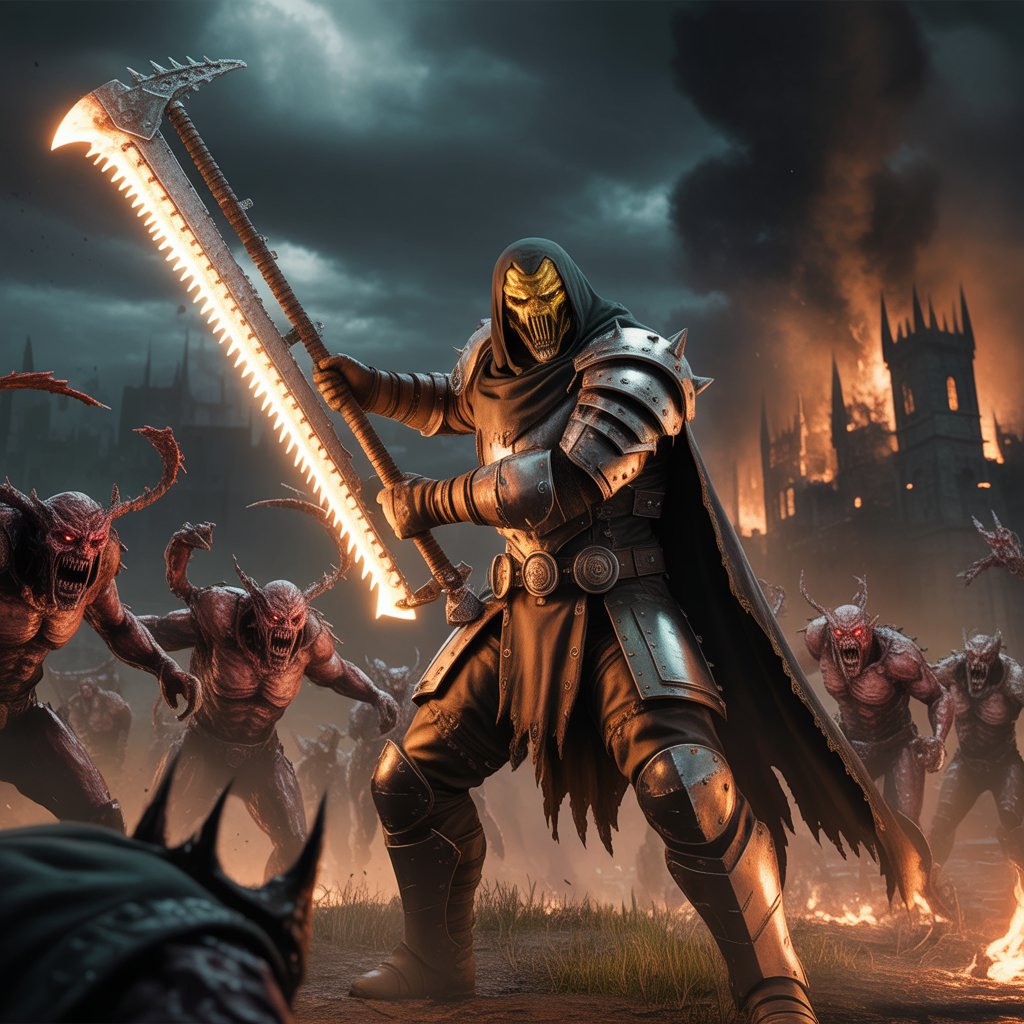
Doom: The Dark Ages continues id Software’s commitment to making their games not only challenging but also highly customizable and inclusive. Whether you’re a hardened Doom veteran or someone picking up a controller for the first time, the game lets you shape the experience to suit your skill level and preferences.
Instead of the traditional preset difficulty modes, this installment introduces a modular difficulty system. Players can fine-tune specific elements like enemy aggression, parry window timing, environmental damage, and resource drops. This is a game that doesn’t just say, “play it your way”—it actually means it.
Want combat to be more punishing but exploration more forgiving? You can do that. Prefer a faster gameplay tempo or reduced cooldowns for glory kills? Just slide the bar. It’s a system that respects the player’s time and ability without watering down the core Doom experience.
On the accessibility front, The Dark Ages makes major strides. The developers have included a wide range of features:
- Colorblind modes with customizable filters
- Adjustable font sizes and UI scaling
- Fully remappable controls
- Motion sickness options, including camera sway and FOV settings
- Assist modes like aim snap and reduced reaction time for parries
Subtitles are offered in multiple languages with adjustable opacity, and important enemy attacks are signposted with clear audio-visual cues. There’s even a built-in combat tutorial mode for newcomers who want to master the parry system before jumping into the main campaign.
These features not only broaden the game’s audience but also show that Doom: The Dark Ages is evolving beyond being just a hardcore shooter. It’s a modern game that embraces challenge while staying open to everyone.
Whether you’re playing for fun or testing your mettle in permadeath mode, the game supports you with flexible, player-first systems that enhance both enjoyment and accessibility.
Replayability & Post-Game Content
While the main campaign of Doom: The Dark Ages can take anywhere from 15 to 20 hours to complete, the real hook lies in its extensive replay value. id Software clearly designed this game with longevity in mind, and it shows in every side path, secret encounter, and unlockable upgrade hidden throughout its medieval war zones.
For starters, each level is littered with collectibles—from Soul Fragments and Rune upgrades to hidden lore entries and challenge portals. Finding everything on your first playthrough is nearly impossible, especially since some secrets are only accessible once you’ve unlocked traversal abilities later in the game. This creates a natural incentive to revisit older levels with new tools and strategies.
Then there’s the Trial of the Ancients—a post-campaign gauntlet that serves as the game’s endgame mode. Here, you’re dropped into a brutal series of wave-based arenas with randomized enemy spawns, modifiers, and boss variants. Think of it like Doom’s version of a roguelike survival mode. Completing these trials unlocks exclusive gear, skins, and even lore-based story extensions.
New Game Plus is another standout feature. You carry over all upgrades and unlocks into a harder version of the campaign with remixed enemy placements and additional objectives. It’s the same story, but with fresh challenges and increased difficulty.
And let’s not forget community challenges. Weekly tasks offer special in-game currency used to purchase cosmetic armor sets, weapon skins, and alternate executions. This gives the game a living, breathing feel—even without multiplayer.
Simply put, Doom: The Dark Ages respects your time. It rewards exploration, encourages mastery, and offers plenty of reasons to return long after the credits roll.
Strengths of Doom: The Dark Ages
There’s a lot to love about Doom: The Dark Ages. Even critics who aren’t fully onboard with the slower pacing admit that the game nails its core identity while pushing the franchise into bold new territory. Here’s a breakdown of what really works:
✅ 1. Combat Depth & Innovation
The parry-based melee system combined with the Shield Saw elevates combat beyond simple shooting. Every encounter becomes a timing and positioning puzzle, rewarding skill and aggression.
✅ 2. Visual & Audio Mastery
This is easily one of the best-looking Doom games to date. The lighting, enemy design, and environmental art direction create an atmosphere that’s as horrific as it is beautiful. The audio design complements it all with a deeply immersive soundtrack and visceral sound effects.
✅ 3. Strong Progression & Customization
The RPG-like upgrade paths and weapon mod system allow players to develop their own playstyle. You’re not locked into one combat flow—you can adapt and evolve.
✅ 4. Replayability & Post-Game Systems
With New Game Plus, weekly challenges, and the Trial of the Ancients, there’s a ton of content beyond the campaign. It’s built to last, not just finish.
✅ 5. Accessibility & Player Choice
The inclusion of granular difficulty and accessibility settings is a huge win. It makes the game open to more players without compromising the core vision.
Ultimately, it’s a game made by developers who love Doom and want others to love it too, whether they’re long-time fans or fresh blood.
Weaknesses and Criticisms
No game is perfect, and Doom: The Dark Ages has its share of drawbacks—even if they don’t break the experience. Understanding these can help set expectations.
⚠️ 1. Slower Pacing May Divide Fans
Some players who adored the speed and momentum of Doom Eternal might find this entry’s slower, more deliberate pace a bit jarring. It’s not worse—it’s just different. But that difference can be polarizing.
⚠️ 2. Dragon & Mech Sequences Feel Underdeveloped
While visually spectacular, these cinematic set-pieces often lack mechanical depth. You’re mostly watching the action unfold or following simple button prompts. More gameplay depth here would’ve elevated them.
⚠️ 3. Story Still Feels Secondary
Despite the stronger world-building, Doom’s story remains more style than substance. The lore is rich if you seek it out, but it never hits emotionally. Cutscenes feel like setup, not payoff.
⚠️ 4. Lack of Glory Kill Animations
Many fans missed the visceral, cinematic glory kills from previous entries. The new “raw execution” system works but lacks the flair that made those finishers iconic.
⚠️ 5. Limited Enemy Variety Mid-Game
In the middle chapters, you may notice some enemy repetition, with recycled patterns that make fights feel familiar. Things pick back up in later levels, but the dip is noticeable.
Still, none of these issues ruin the game. They’re more like minor missteps in an otherwise triumphant return to form for the franchise.
Final Verdict – Should You Play Doom: The Dark Ages?
Absolutely—especially if you’re hungry for a shooter that breaks away from the formula. Doom: The Dark Ages doesn’t just copy what’s worked before. It reimagines what Doom can be, infusing the franchise with a mythic brutality and knightly savagery we never knew we needed.
This isn’t just Doom in medieval clothes. It’s a full-fledged rethinking of the series. The slower, parry-focused combat won’t be for everyone, but it offers incredible tactical depth for those willing to embrace the change. The world design is jaw-dropping, the soundtrack fits the mood like a cursed glove, and the gameplay loop is addictive in all the right ways.
You’ll feel powerful. You’ll feel challenged. And most importantly—you’ll have a damn good time.
Whether you’re a returning fan or new to the series, Doom: The Dark Ages is a bloody love letter to chaos that’s well worth playing.
Conclusion
Doom: The Dark Ages is everything a prequel should be—bold, different, and foundational. Rather than simply retread the formula that made Doom Eternal a hit, it dares to slow things down, get tactical, and take you deep into the Slayer’s mythological past. It’s a gamble that pays off.
The slower, shield-based combat offers a refreshing twist without losing the adrenaline and intensity the franchise is known for. The environments are among the most visually creative in the series, and the music delivers a haunting, brutal backdrop to every skirmish. The Shield Saw alone redefines melee mechanics in first-person shooters, turning you into a grim, methodical killing machine.
That said, this won’t be everyone’s favorite Doom. Fans craving the breakneck, jet-powered pace of the 2016 reboot may struggle with the heavier movement and parry-focused gameplay. And while the story is deeper and more lore-rich, it still feels like seasoning, not the main course.
But for those who can embrace its slower, meatier design, The Dark Ages offers one of the most satisfying, stylish, and mechanically rich Doom experiences yet. It’s the franchise at its most mythic and experimental—and one of the best single-player shooters of 2025.
Score: 9/10 – A brutal, beautiful beast.
FAQs About Doom: The Dark Ages
1. Is Doom: The Dark Ages connected to Doom Eternal?
Yes, Doom: The Dark Ages is a prequel to Doom (2016) and Doom Eternal. It explores the origins of the Doom Slayer and the ancient war between Hell and the Sentinel Order. While it features new characters and settings, fans will recognize connections to familiar lore and storylines.
2. Can I play Doom: The Dark Ages without playing the previous games?
Absolutely. The Dark Ages is designed as a standalone experience. While prior Doom knowledge enhances appreciation of the lore, it’s not required to enjoy the gameplay or understand the main plot.
3. Are there any multiplayer modes?
No. Doom: The Dark Ages is a pure single-player experience. id Software focused entirely on crafting a compelling campaign and did not include competitive or co-op multiplayer modes.
4. How long does it take to beat the game?
The main campaign lasts around 15 to 20 hours, depending on your playstyle. If you aim to 100% the game—completing all side quests, collecting secrets, and conquering endgame trials—it can easily stretch beyond 30+ hours.
5. What platforms is Doom: The Dark Ages available on?
The game is available on PlayStation 5, Xbox Series X|S, and PC. It supports performance and quality modes on consoles and offers robust graphic settings for PC players, including support for ray tracing, DLSS, and ultrawide monitors.
Please don’t forget to leave a review.